




 Red wine
 White wine
 Rosé wine
 Sweet wine
 Orange wine
 Champagne
 Cava
Cava Prosecco
 Lambrusco
 Crémant
 Moscato d'Asti
 Franciacorta
 Pet-Nat
 Corpinnat
 Other sparkling wines
 Wine gift boxes
 Boxed wines
 Boxed sparkling wines
 Wine bottles and glasses
 Gift card
 Non alcoholic Wine
 Non alcoholic Sparkling wine
 Aromas
 Wine conservation
 Decanters and aerators
 Bottle identifiers
 Corkscrews
 Service
 Glass identifiers
 Cleaners
 Accessories set
 Wine glasses
 Contact

Types of Oak in Wine Ageing: Differences and Characteristics
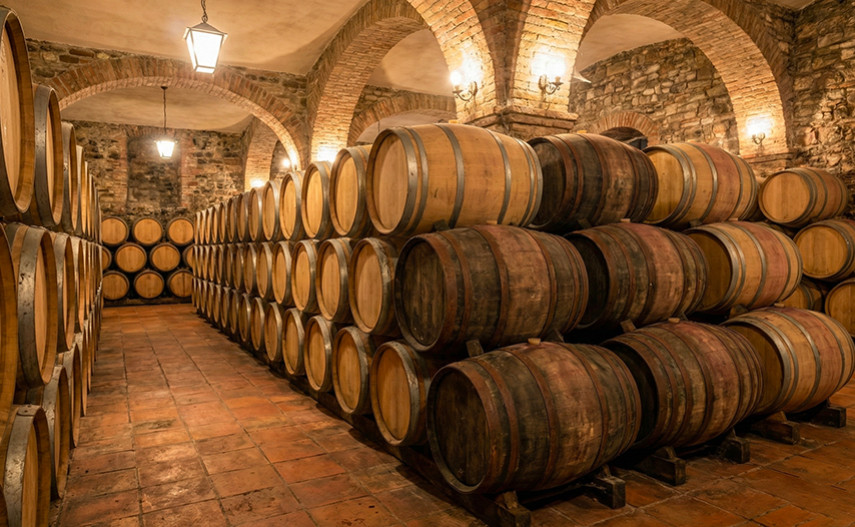
Discussing wines with ageing is to speak of patience, balance... and wood. Indeed, most of us have heard at some point that many wines "spend time in barrels," usually oak. But have you ever wondered what truly happens inside that barrel while the wine rests in silence?
What is not always so apparent is precisely what oak contributes to wine, how it influences its character, and why not all woods are the same. Today, we invite you to uncork this topic with us and discover why barrel ageing is much more than just a simple phase in the winemaking process. Are you in?
Oak: Centuries of History in the Service of Wine
For centuries, oak has been the perfect ally of the winemaker. Not only for its resilience and durability but also because it interacts with wine in an almost magical way. Barrel ageing allows for the modification of colour, the rounding of texture, the refinement of tannins, and the enrichment of the wine's aromatic profile.
During this process, the wine is slowly oxygenated, and the tannins polymerise, resulting in a more silky and balanced sensation on the palate. The outcome is wines that are more stable, complex, and pleasurable to drink.
Aromas That Tell Stories
But if there is something enchanting about oak, it is its ability to impart unique aromas and flavours: toasted notes, spices, vanilla, cocoa, coconut, or even smoky hints. A true sensory spectrum that the winemaker can modulate according to the type of wood, the barrel's toasting, and the ageing duration.
And here comes a crucial decision: which type of oak to choose?
The Main Players in Barrel Ageing
In contemporary oenology, three main types of oak stand out, each with its own personality:
French Oak
Elegant, subtle, and refined. French oak barrels impart fine and silky tannins, with a delicate sense of sweetness and a profound aromatic complexity, characterised by spicy notes, gentle toasting, and hints of cocoa or pepper.
This type of oak is especially common in wines from regions such as Rioja, Ribera del Duero, Burgundy, or Bordeaux, where the aim is to preserve the expression of the terroir and achieve balanced, elegant wines with great ageing potential.
American Oak
More compact and less porous, American oak imparts a more pronounced and recognisable character. Here, you find intense aromas of vanilla, coconut, caramel, and sweet wood, which provide a more luscious and enveloping sensation on the palate.
It is very common in classic wines from Rioja, Ribera del Duero, and in many New World regions, such as California or Australia, where wines with greater aromatic weight, structure, and a more direct and seductive profile are crafted.
Central European Oak
Primarily sourced from countries like Hungary, this oak shares similarities with French oak, although it imparts fewer aromatic compounds to the wine. For this reason, it is ideal when the goal is to respect the grape's identity and the vineyard's character to the fullest.
It is often found in wines from emerging regions or more artisanal projects, both in traditional areas like Penedès and in some parts of Central Europe, where a discreet, elegant, and well-integrated ageing is sought.
Choose Your Barrel, Choose Your Experience
Each type of oak leaves its mark, and each wine tells a different story. Only one question remains: which one will you uncork first?
We assure you that, whatever your choice, the journey is worth it.


