



 Red wine
 White wine
 Rosé wine
 Sweet wine
 Orange wine
 Champagne
 Cava
Cava Prosecco
 Lambrusco
 Crémant
 Moscato d'Asti
 Franciacorta
 Pet-Nat
 Corpinnat
 Other sparkling wines
 Wine gift boxes
 Boxed wines
 Boxed sparkling wines
 Wine bottles and glasses
 Gift card
 Non alcoholic Wine
 Non alcoholic Sparkling wine
 Aromas
 Wine conservation
 Decanters and aerators
 Bottle identifiers
 Corkscrews
 Service
 Glass identifiers
 Cleaners
 Accessories set
 Wine glasses
 Contact

Why the Wines of Andalucía are Unique
When we think of Spanish wines, Rioja or Ribera del Duero almost invariably spring to mind. However, in the south, in Andalucía, treasures with their own distinct character are crafted. Unmistakable wines, where sun, wind, tradition, and creativity converge to create something that cannot be found anywhere else.
Extreme Climate: The Secret of Its Personality
On Spain's wine map, Andalucía is depicted as a land of extremes: scorching sun, relentless winds, and seemingly endless summers. Yet, far from being a hindrance, these conditions are the source of its character. Here, there is no attempt to mimic foreign models; the wines are born from the constant dialogue between the harshness of the climate and the patience of the winemaker. From this tension emerge fortified wines of great body and personality, as well as whites and reds that surprise with their freshness and balance, even under the most intense sun.
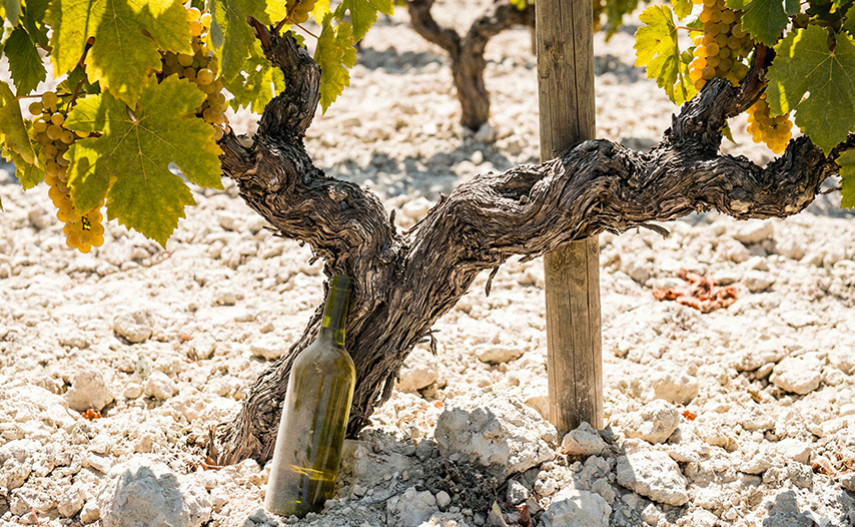
Indeed, while in many regions extreme heat is an adversary, in Andalucía it becomes an ally. The albariza of Jerez —the soil so white it almost dazzles— reflects the light and helps regulate the vine's temperature. The levante and poniente winds provide moisture and ventilation, and the sun, constant and generous, completes the equation. This combination of soil, wind, and light allows the grapes to achieve a maturity and concentration of sugars difficult to replicate elsewhere. The result is a delicate balance between challenge and harmony, the fruit of centuries of adaptation to a demanding environment that does not tolerate mediocrity.
Wines That Live and Evolve
Andalusian wines were not created to be consumed in haste or to vanish quickly. From their origins, they are linked to the idea of resilience, journey, and permanence. As early as the Phoenician era, the wine from the south of the peninsula was a valuable commodity: it was transported in amphorae, served as a trade product, and had to withstand long sea voyages without losing its qualities. The Romans consolidated its production and distribution, while during the Andalusian period, the cultivation of the vine was preserved, and fundamental agricultural techniques were perfected, preventing this tradition from being interrupted.
With the arrival of the Christian kingdoms, wine regained a central role in daily and religious life, and centuries later, it was the English merchants who definitively shaped its character. Their demand for stable wines, capable of traveling and aging without deterioration, spurred the creation of styles designed to gain complexity over time. Thus, the history of Andalusian wine is not a broken line but a sum of cultural contributions that overlap and converse with each other.
This historical vocation for longevity left a profound mark on its method of production. In Andalucía, wine is not merely made: it is nurtured, accompanied, and allowed to evolve. From this arise unique techniques in the world, such as the veil of flor, a natural layer of yeast that protects the wine from oxygen and imparts unmistakable aromas and flavors, or oxidative aging, where controlled contact with air slowly transforms the wine, endowing it with depth and complexity.
In this same spirit emerges the solera and criaderas system, a way of understanding aging as a continuous and collective process. The casks are organized in tiers: the criaderas contain the youngest wine, while the solera holds the oldest. In each extraction, a portion of the wine from the solera is drawn for consumption and replenished with wine from the upper criadera, which in turn is fed by the next, and so on. No bottle belongs to a single vintage: each is the result of many vintages that blend, balance, and transmit character over time.
Thanks to this system, Andalusian wine does not age in isolation but inherits memory. Therefore, these wines breathe and change even after being bottled, reminding us that drinking an Andalusian wine is not merely a sensory act but an immersion in a living process, rich in history, tradition, and personality.
Versatility at the Table
Although sometimes confined to the category of aperitif, Andalusian wines are perfect companions for the entire gastronomic experience. Finos and manzanillas, with their freshness and delicacy, whet the appetite and perfectly accompany salads, fish, or light dinners, enhancing flavors without overshadowing them. The still wines —aromatic whites, vibrant rosés, or elegant reds— further expand the possibilities: they harmonize with rice dishes, roasted vegetables, white meats, and even more complex dishes, providing structure, freshness, or intensity depending on the variety and aging. Meanwhile, fortified wines like Pedro Ximénez or Cream offer sweetness and depth that pair sublimely with desserts, aged cheeses, or more intense flavors, offering a contrast that awakens the senses.
In essence, drinking a fino from Jerez, a manzanilla from Sanlúcar, or a sweet Pedro Ximénez from Málaga is, essentially, drinking Andalucía. Here, there are no shortcuts or imitations; only authenticity, character, and a touch of magic that only time and the land with its climate, soils, winds, and history can provide.