



 Red wine
 White wine
 Rosé wine
 Sweet wine
 Orange wine
 Champagne
 Cava
Cava Prosecco
 Lambrusco
 Crémant
 Moscato d'Asti
 Franciacorta
 Pet-Nat
 Corpinnat
 Other sparkling wines
 Wine gift boxes
 Boxed wines
 Boxed sparkling wines
 Wine bottles and glasses
 Gift card
 Non alcoholic Wine
 Non alcoholic Sparkling wine
 Aromas
 Wine conservation
 Decanters and aerators
 Bottle identifiers
 Corkscrews
 Service
 Glass identifiers
 Cleaners
 Accessories set
 Wine glasses
 Contact

Wines for Aging: Older Does Not Always Mean Better
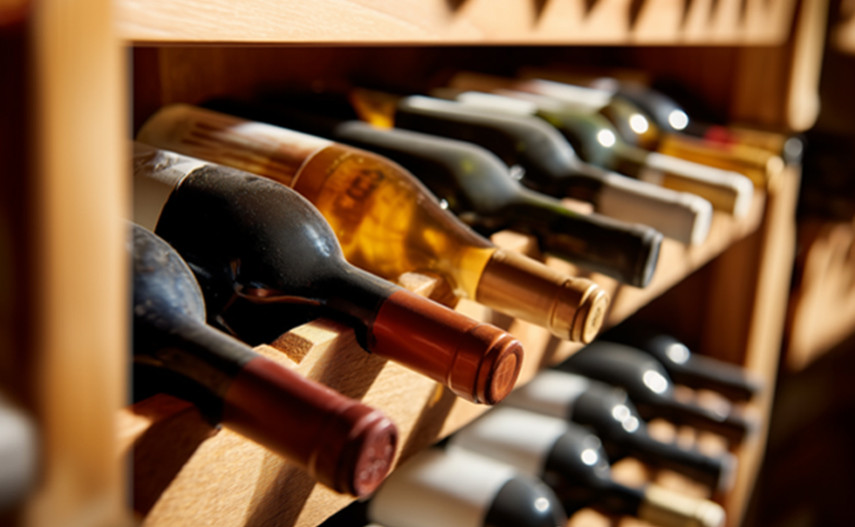
"The older, the better." You've likely heard this phrase applied to wine, almost like a mantra that sounds wise and infallible. The reality, however, is far more intriguing.
Indeed, there are wines that transform and become more magnificent with the passage of time, yet not all are destined to wait silently within a bottle. Time can be an ally... or an executioner. And therein lies the enchantment of age-worthy wines: understanding that not every wine improves with age, and that its greatness lies in recognizing when it has reached its perfect moment.
What is an age-worthy wine?
An age-worthy wine is one that possesses the necessary qualities to continue maturing in the bottle, developing new layers of aromas, flavours, and textures. Not all wines have this capacity, and this does not make them better or worse, merely different. There are young wines that shine with their freshness and immediate sparkle, designed to be enjoyed without delay. And there are others that demand patience, for their true character is revealed over the years. Knowing how to differentiate them is the secret to avoiding disappointment with that bottle we saved for "a special occasion".
The keys to an age-worthy wine
The first indicator is quality: an age-worthy wine always begins with impeccable grapes, but other factors also play a role:
Acidity
It is the backbone of the wine. Good acidity provides freshness, stability, and longevity, as well as inhibiting bacteria that could harm it. Therefore, the greater the natural acidity, the better it can evolve.
Alcohol and polyphenols
Tannins, colour, and structure support its evolution over time. Varieties such as cabernet sauvignon, syrah, merlot or tempranillo are excellent candidates.
Winemaking and ageing
A young wine, intended for immediate consumption, is unlikely to improve with age. In contrast, those that undergo barrel ageing have a greater chance of developing in the bottle. Classic examples: the reservas and gran reservas of Rioja or Ribera del Duero.
Climate of origin
Grapes that mature in cooler climates tend to produce wines with higher acidity, which, as mentioned, enhances their ageing potential.
And yes, there are also wonderful age-worthy white wines: chardonnay, riesling or viura (macabeo) can surprise us with their complexity after several years in the bottle.
Time, a fickle ally
The perennial question is: how long can a wine be kept? And the answer is as relative as it is personal. Experts can estimate a lifespan curve, but wine is a living entity, in constant transformation, and its evolution depends on myriad factors. Light, temperature fluctuations, humidity... all can alter its fate. Even two bottles from the same vintage can age differently.
Ultimately, wines are akin to people: some reach their peak quickly, others require more time, and each follows its own path.
Patience in the hands of the winemaker
Fortunately, we are not alone on this journey. Many wineries undertake part of the work for us, ageing their wines under optimal conditions and releasing them to the market when they are at an ideal point for consumption. Thus, we do not have to wait years to open a bottle and enjoy its splendour.
So, is older better?
The answer is simple: not always. A young wine can be extraordinary, full of energy and vitality. An age-worthy wine, on the other hand, offers us profound and sophisticated nuances, but demands patience and suitable conditions. The key lies in choosing wisely and, above all, in enjoying the wine at its best moment, not in storing it without reason.
Because, in the end, opening a bottle is a celebration of the present. And in this, wine —old or young— always knows what it is doing.