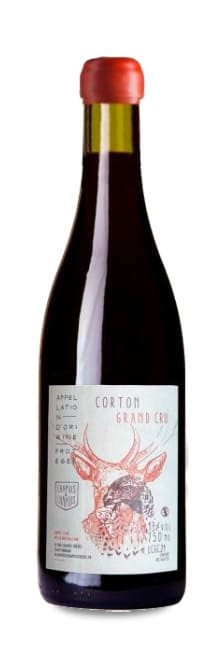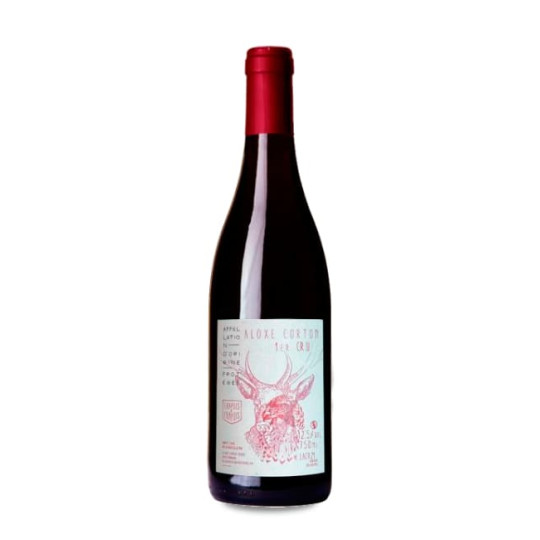


Legend has it that Hildegard, Charlemagne's wife, was not fond of the red wine stains that lingered in her husband's beard whenever the emperor indulged in wine. Consequently, the consort urged the emperor to cultivate white grapevines. And thus, the vineyard now known as A.O.C. Corton-Charlemagne was established; however, much to the empress's chagrin, red wine continued to be produced in the region (fortunately), albeit under the esteemed appellation A.O.C. Corton Grand Cru. It is here that the Chapuis brothers have ventured to craft their Chapuis & Chapuis Corton Rouge.
Over 90 hectares of vineyards on reddish marl soils are the birthplace of this spectacular red wine. Here, just north of the Burgundian Côte de Beaune, the Pinot Noir vines flourish between 250 and 330 meters above sea level, forming a sort of amphitheater with a southern exposure, where these deeply garnet red wines emerge. Camille Rodier once described it as "the king of the bon vivants." With all that said, there's little more to add, wouldn't you agree?
Both Romain and Jean-Guillaume Chapuis, who have grown up among vineyards, are well aware of their craft and knew from the start that the A.O.C. Corton Grand Cru had to be an integral part of this new venture. Whether with their own vineyards or by purchasing grapes from colleagues; working this appellation naturally was a challenge they were determined to undertake. And they have exceeded expectations.
Chapuis & Chapuis Corton Rouge is created in a completely natural way, without any chemical intervention. This principle is upheld both in the vineyard and the winery. Among the rows of the Chapuis & Chapuis Corton Rouge vineyard, work is done by hand, adhering to the traditional principles and knowledge passed down from the Chapuis family. In the winery, Chapuis & Chapuis Corton Rouge undergoes spontaneous fermentation with indigenous yeasts, and it is left to age in oak barrels before bottling.
It seems Hildegard was quite a pious woman, leaving behind a legacy of constructing several churches. Commendable in that respect; but when it came to wines, her judgment was somewhat lacking. Specifically, Hildegard was the third of Charlemagne's six wives. Let's hope she had more luck with the remaining three and that they did not trouble the emperor when savoring a red wine like Chapuis & Chapuis Corton Rouge.