Some of these names might ring a bell: La Faraona, El Rapolao or Valtuille de Abajo. Many identify them as some of the most coveted wines from El Bierzo (Castilla y León). Yet, intriguingly, before they were wines, they were places. Names of vineyards, villages, and plots that existed long before critics, scores, or lists of great wines arrived.
The explanation lies in the history of Bierzo itself. This wine-growing region has been built over centuries as a genuine mosaic of small plots, many of which are planted with the area's flagship variety, mencía, representing over 76% of the vineyard and cultivated here since the Middle Ages. For generations, these vineyards have remained in the hands of smallholders. Vintners who sold their grapes to cooperatives or made wine for family consumption. Some plots were abandoned over time, but many others endured, preserving their identity and name. Today, that history is being transformed into oenological value.
In recent years, the Denominación de Origen Bierzo has made significant strides by allowing more precise geographical indications on labels. Among these, the Vino de Villa category stands out, identifying the wine's origin at the village level. It is, at its core, an acknowledgment of something vintners have always known: not all villages —nor all plots— are the same.
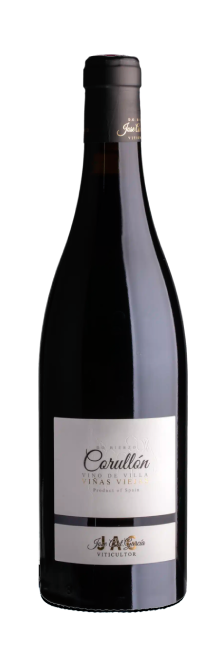
A fine example of this new understanding of wine is José Antonio García Viticultor Corullón Vino de Villa. It originates in Corullón, a small village nestled in the foothills of the Montes de León, and is crafted primarily from mencía with a small percentage of traditional white varieties. The grapes come from old vines planted between 1930 and 1940, spread across approximately 200 small plots that together total less than nine hectares. These are vines averaging around 65 years old, cultivated on poor slate soils using organic farming methods.
Harvesting is done manually, and the wine ferments for about 30 days in open oak vats. It then undergoes 14 months of ageing in French oak barrels before being bottled without clarification or filtration. The result is a wine that does not seek to represent an entire region but rather captures with precision the character of a very specific place in Bierzo.
All indications suggest that the future of wine will increasingly head in this direction: fewer broad denominations and more recognition of specific villages, sites, and vineyards. Wines like José Antonio García Viticultor Corullón Vino de Villa are clear evidence of where the wine map is looking today.





 Red wine
 White wine
 Rosé wine
 Sweet wine
 Orange wine
 Champagne
 Cava
Cava Prosecco
 Lambrusco
 Crémant
 Moscato d'Asti
 Franciacorta
 Pet-Nat
 Corpinnat
 Other sparkling wines
 Wine gift boxes
 Boxed wines
 Boxed sparkling wines
 Wine bottles and glasses
 Gift card
 Non alcoholic Wine
 Non alcoholic Sparkling wine
 Aromas
 Wine conservation
 Decanters and aerators
 Bottle identifiers
 Corkscrews
 Service
 Glass identifiers
 Cleaners
 Accessories set
 Wine glasses
 Contact



 Castilla y León


 Attention
