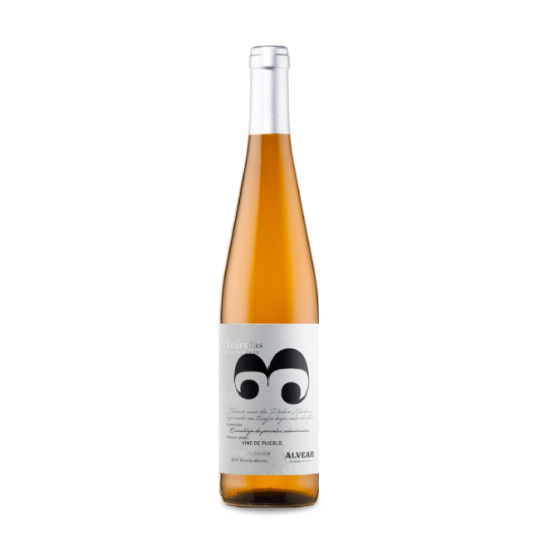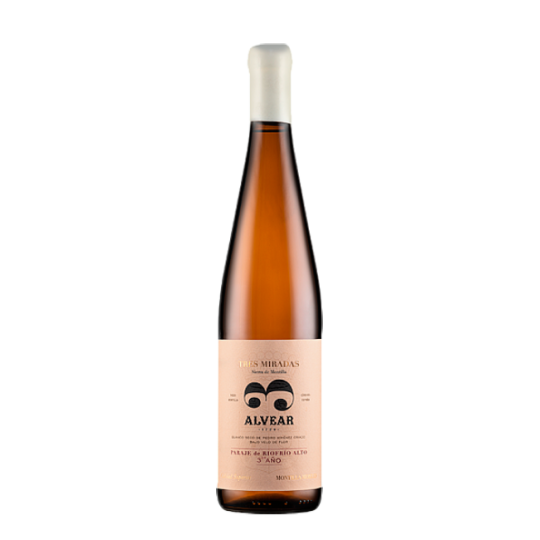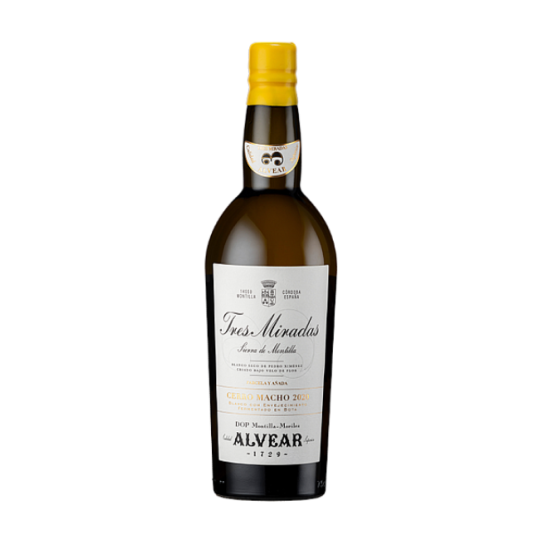


The origin of Pedro Ximénez remains uncertain. While some claim it originated in the Canary Islands or Madeira, others recount the legend of the German soldier Pedro Siemens. According to the tale, this variety—extensively cultivated in Andalusia—reached the southern Iberian Peninsula thanks to this soldier from the Tercios de Flandes who fought in Germany under the service of Charles V. Whether true or not, and always with the Andalusian ingenuity in the background (which eventually transformed Pedro Siemens into Pedro Ximénez), this variety reigns supreme in Andalusia, specifically in the D.O. Montilla-Moriles, located in the southern part of the province of Córdoba, in the northern central area of Andalusia.
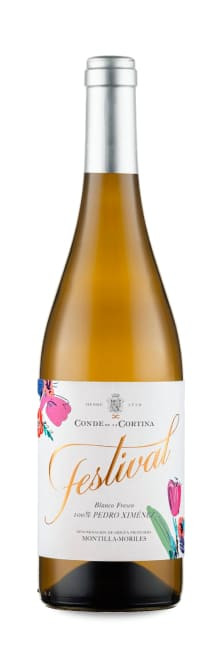
Although the most renowned production of Pedro Ximénez involves sweet wines, this variety flexes its muscles and demonstrates remarkable dry vinifications. And if there is any place where it can shine, it is precisely in the D.O. Montilla-Moriles, where up to 38 million kilos of this variety are harvested. The result is wines that break the mold and showcase their versatility, such as Festival.
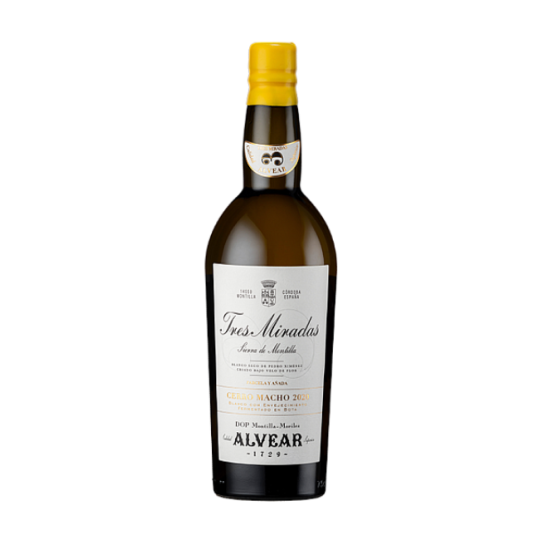
Festival Pedro Ximénez is a dry white wine produced by Alvear, one of the oldest wineries in the area. Specifically, the grapes for Festival Pedro Ximénez come from Casilla del Hospital, a 33-hectare vineyard located in the Quality Superior zone in the Sierra de Montilla. Here, the vines, with various orientations, grow on marl and limestone soils from the Cretaceous period (similar to the soils where the finest French wines are born). Regarding the climate, it is semi-continental Mediterranean, characterized by very hot, long, and dry summers (with temperatures reaching up to 46ºC), short winters, and irregular rainfall. As for Alvear’s part, each plot is worked individually, always ensuring minimal intervention on the vineyard with small doses of sulfur and copper, as well as natural plants (sage, wormwood, cinnamon…). The use of herbicides has been completely eliminated.
This minimal intervention for Festival Pedro Ximénez continues in the winery, where very low doses of sulfur dioxide are applied upon grape entry. All subsequent operations are always aimed at preserving and enhancing the varietal aromas of the grape. Therefore, efforts are made to avoid breaking the grapes and to ensure that Festival Pedro Ximénez ferments at a low temperature. The final touch comes from the lees, with which the wine will remain in contact for 8 months. This aging on these dead yeasts will provide Festival Pedro Ximénez with structure and volume on the palate.