

When we think about the wines of Piedmont (the region in the northwest of the Italy), the famous reds made from the Barbera or Freisa varieties always come to mind, but the region’s whites also have a lot to say for themselves. For one, Leonardo da Vinci was a great advocate and ambassador of them. In particular, this Renaissance polymath was a great lover of Timorasso, a white variety that is typical of the Tortonesi hills. Such was his admiration that Da Vinci gave a bottle of this wine to Isabella of Aragon and Gian Galeazzo Sforza on their wedding day.
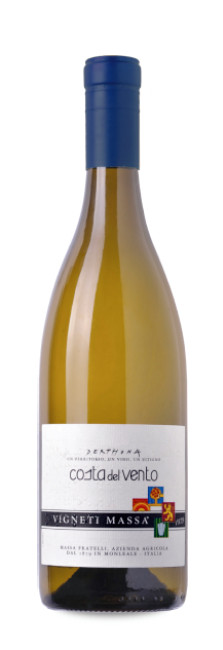
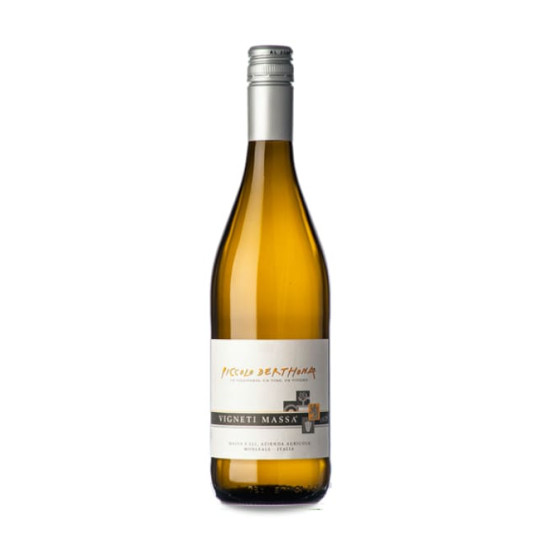
However, paradoxically, this variety was never very well recognised in the area, and was even in danger of disappearing due to phylloxera and two world wars where the farmers, forced by circumstance, went looking for varieties that gave much faster yields. This was true until the 1970s when Walter Massa came onto the scene. This independent winemaker is a true guru and leader who, based at Vigneti Massa (his family winery), has been at the forefront of a whole movement whose mission was to recover this native variety. At first he started alone, producing the first Timorasso vintage of only 570 bottles in 1987 from the 400 surviving vines in his winery’s vineyard, which he founded in 1879. After taking cuttings, Walter Massa planted new plots of this variety. He was followed by other winegrowers, finally forming a collective producing wines within the D.O.C. Colli Tortonesi. One of them is Vigneti Massa Costa del Vento Derthona.
Vigneti Massa Costa del Vento Derthona is a single-variety Timorasso grown on 150 hectares in this area, cultivated by more than 40 winegrowers under the Orbertenga brand. This county, which for years was under the power of Count Obwerto, lies at an altitude of 300 metres above sea level on clay-marly soils, which give a strong minerality to the wines. After the harvest, the Vigneti Massa Costa del Vento Derthona grapes are taken to the winery, destemmed and crushed, ready to undergo a cold maceration of about 40-45 hours where aromas are extracted. After this, the wine is transferred to stainless steel tanks, where it stays for a year. During this time, alcoholic fermentation takes place and, once finished, the wine remains in contact with its lees. Only periodic battonages are necessary. After this, Vigneti Massa Costa del Vento Derthona is bottled and sold.
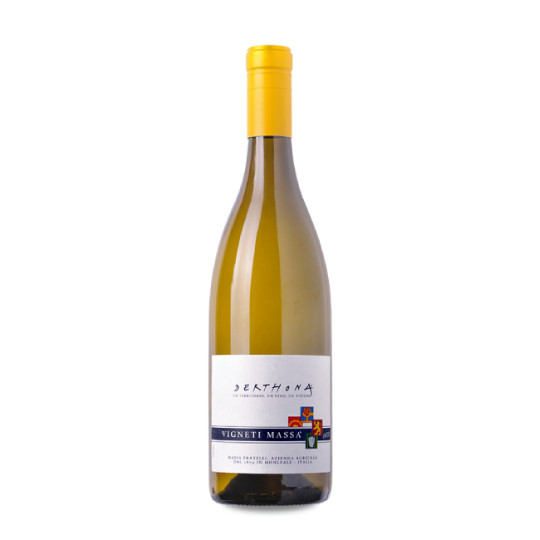
Derthona was the name the Romans gave to the city of Tortona. With this name, Walter Massa reminds us that what is important is not labels or denominations, but the origin and the land. Recognising the taste of the place where it all begins.