


 Red wine
 White wine
 Rosé wine
 Sweet wine
 Orange wine
 Champagne
 Cava
Cava Prosecco
 Lambrusco
 Crémant
 Moscato d'Asti
 Franciacorta
 Pet-Nat
 Corpinnat
 Other sparkling wines
 Wine gift boxes
 Boxed wines
 Boxed sparkling wines
 Wine bottles and glasses
 Gift card
 Non alcoholic Wine
 Non alcoholic Sparkling wine
 Aromas
 Wine conservation
 Decanters and aerators
 Bottle identifiers
 Corkscrews
 Service
 Glass identifiers
 Cleaners
 Accessories set
 Wine glasses
 Contact

Bordeaux wine: La rive droite
For more than two centuries, the French region of Bordeaux has been recognized as the world’s first wine region. Bordeaux wine is sought internationally and many of the Châteaux producers are considered true legends by self-respecting wine lovers.
Bordeaux is the capital of the New Aquitaine region, located in the southwest of France and marked especially by the course of two of the five longest rivers in the country: the Dordogne and the Garonne, which divide the region into three areas: “La rive droite”, right bank of the Dordogne, “La rive gauche”, located to the left of the Garonne river and the “Entre-deux-Mers” (between two seas) area between the two rivers and which has the singularity of making dry white wines. At the southern end we also find the home of the most famous sweet and elegant wines in the world: the wines of Sauternes. All of this makes Bordeaux the largest “premium wine” production district in the world.
Today, we’ll talk about the wine region located on the right bank of the Dordogne River, known as Libourne, home of the most legendary and desired Bordeaux wines worldwide.
This name may not mean anything in particular to you, but what if we talk about Pomerol or Saint-Èmilion? Don’t despair, we’ll do so shortly.
The Libournais, or “right bank” is the most dynamic region of Bordeaux, known for its clay soils which produce extraordinary red wines and where the Merlot variety (which in this area matures early) is the ultimate queen, rather than Cabernet Sauvignon which predominates in the “left bank” vineyards, such as those of Médoc and Graves. In fact, when Cabernet Sauvignon is grown in areas of Saint Èmilion where limestone soils dominate, it can lead to strong and tannic wines, so it isn’t common for this vine to be used on the “right bank” and this is one of the characteristics that make Libournais wines so different from those produced on the “left bank”.
Bordeaux is located in a prime site, because its closeness to the sea and river tributaries contribute to a moderate and stable climate.
Pomerol and Saint Èmilion, a pair of gems on the banks of the Dordogne.
Whole books could be dedicated to talking about all the denominations that make great wines on the “right bank” but this time we’ll focus on two regions: Pomerol and Saint Èmilion, two of the most prestigious wine regions in the whole of Bordeaux and also known worldwide for the extraordinary wines made there.
Pomerol is the smallest “premium French wine” region in Bordeaux, located 35 km east of the city. It has about 800 hectares of vineyards settled mainly on sandy soils. Here, softer, richer and more attractive Bordeaux wines are made that can reach even higher prices than the Premiers Crus del Médoc (on the left bank of the Garonne River). As we have already mentioned, they are wines which are made mainly with the Merlot variety accompanied in smaller quantities by Cabernet Franc and, in minimal proportions, by Cabernet Sauvignon, and are deep in color, sharp and with elegant tannins, ripe fruity aromas, and sometimes they are simply an explosive cluster of all these qualities; the expression of what it means to be a great wine.
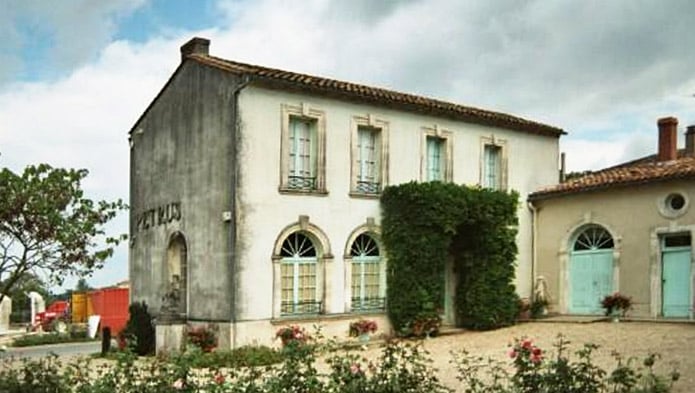
Petrus, a wine without a Château.
Petrus is the legendary Bordeaux wine considered the best in the world. It’s made only with the Merlot variety that comes from a small vineyard which is planted exclusively on plots of “argile bleu” (blue clay) a kind of soil that is not found anywhere else on the planet.
It’s the most concentrated and rich Pomerol wine, powerful, deep and delicious. Its great vintages have a palate strength reminiscent of a good Port. It’s said that the secret of its greatness lies in its remarkable balance and penetrating aroma.
This legendary aura which surrounds Petrus also contains various curiosities. If you look closely, the word “Château” which is so characteristic of the names of Bordeaux wines does not appear (nor ever has appeared). There is no authentic “Château” (castle) on this estate, so the owners chose not to use this name in their wines. And by the way, the family has a history of inheritance, theft, betrayal and disappearance of wines in the style of “Falcon Crest”. There’s no doubt that reality can be stranger than fiction.
Important people have also contributed to the fame of Petrus. US President John F. Kennedy used to uncork a bottle to celebrate an important success and Queen Elizabeth II chose it to be served at her wedding banquet.
The best (and most expensive) sangria in the world.
This iconic Bordeaux wine has become part of literature, television and cinema. In a scene from the movie Barbecue, one of the characters makes a sangria with a Petrus by mistake, and his friends call it “the best sangria in the world”.
Let’s talk now about another of the gems of Libournaise: Saint Èmilion.
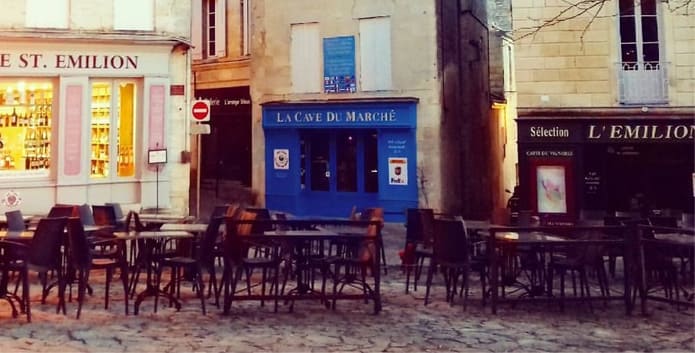
It’s 35 km northwest of the city of Bordeaux. It’s the neighboring region of Pomerol and smaller than Médoc. As well as being known for its extraordinary wines, this beautiful medieval city also has an important cultural heritage which UNESCO recognized by naming it a World Heritage Site in 1999.
As in Pomerol, Saint Èmilion wines are made from the Merlot and Cabernet Franc varieties with a minimal proportion of Cabernet Sauvignon.
This wine region presents drastic variations in its terroir, which allows us to find vineyards with calcareous soils, clays with marls, limestone rocks, sandy soils and gravel. The plots that are located in the surroundings of the city that gives its name to this denomination have limestone and clay soils which provide vigor and body to their wines, while those vineyards located on the Dordogne offer softer wines.
In Saint Èmilion, the classification of wines is more rigorous and local, unlike other wine regions of Bordeaux. The “Châteaux” that produce top quality wines are divided into Premiers Grands Crus Classés (A) and Grands Crus Classés, where the renowned and acclaimed Château Cheval Blanc tops the list.
A winning horse.
Just as Petrus is the legendary wine of the Pomerol region, Saint Èmilion has its winning horse, the legendary Château Cheval Blanc (white horse)
Château Cheval Blanc is an elegant mansion which produces splendid wines that are considered one of the most balanced and best in the world. Château Cheval Blanc has a terroir that differentiates it from other Châteaux de Saint Èmilion. Its soils are composed of alluviums from the Quaternary Period with almost equal proportions of gravel and clay, while in the rest of the region limestone soils predominate.
This legendary wine also has its own cluster of curiosities, anecdotes and myths that have helped to further enhance its worldwide fame.
It is said that Jacques Hebrard, director of the Château Cheval Blanc, was outraged by the rating that the famous wine critic Robert Parker gave his 1981 vintage and asked him to taste it again. When Parker returned to the farm, he was attacked by Hebrard’s dog while Hebrard remained impassive. Robert Parker asked Jacques Hebrard for a bandage to cover the wound on his leg and instead Hebrard offered him a copy of the article in The Wine Advocate magazine. That day Parker did another tasting and found it significantly changed from the previous one. Subsequently, Robert Parker updated his ratings and published them in the next issue of the magazine.
Château Cheval Blanc is also a real character in film and television.
In the film Sideways, a classic among wine lovers, Miles Raymond, the main character, is in love with the Pinot Noir grape (flagship variety of Burgundy wines) but hates Merlot wines and believes that Cabernet Sauvignon wines “can be powerful and spectacular but for some reason they seem too prosaic”. However, his most precious possession is a 1961 Château Cheval Blanc bottle that, curiously, is made with Merlot and Cabernet Sauvignon.
Have you had the good fortune of tasting some of these great Bordeaux wines?