




 Red wine
 White wine
 Rosé wine
 Sweet wine
 Orange wine
 Champagne
 Cava
Cava Prosecco
 Lambrusco
 Crémant
 Moscato d'Asti
 Franciacorta
 Pet-Nat
 Corpinnat
 Other sparkling wines
 Wine gift boxes
 Boxed wines
 Boxed sparkling wines
 Wine bottles and glasses
 Gift card
 Non alcoholic Wine
 Non alcoholic Sparkling wine
 Aromas
 Wine conservation
 Decanters and aerators
 Bottle identifiers
 Corkscrews
 Service
 Glass identifiers
 Cleaners
 Accessories set
 Wine glasses
 Contact

Burgenland: The red revolution
When we think Austria, we think dry, white wines, mostly made with the Grüner Veltliner variety. There are also the sweet dessert wines made as a result of botrytis or noble rot. However, a new generation of producers is turning the wine scene on its head. Particularly in Burgenland, the country’s warmest region, where red grapes are mostly used to make subtle, low alcohol and very mineral wines.
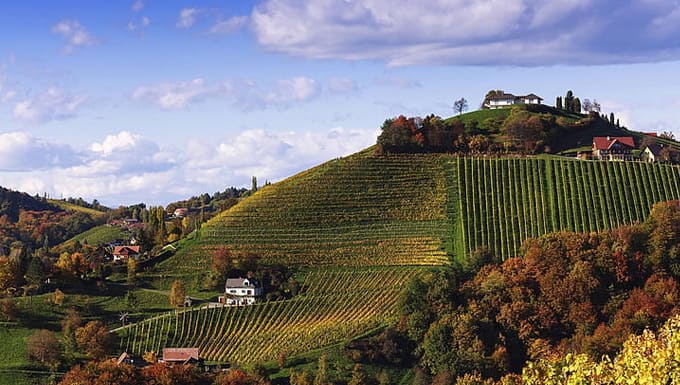
If you are a wine enthusiast who wants to keep up with new developments on the wine scene, you need to take a look at these Burgenland wines.
Land of the sun
Lying on the Hungarian border, the Burgenland region is known as “the land of the sun” for being the warmest area in the country and enjoying 300 days of sunshine a year. An ideal climate for growing a wide variety of white grapes like Weissburgunder (Pinot Blanc), Grüner Veltliner, Neuburger, Muskateller (Muscat Blanc à Petits Grains), Muscat Ottonel and Sämling 88. But it is also great for cultivating red grapes like Blaufränkisch, Zweigelt, Saint Laurent, Pinot Noir and even Merlot and Cabernet Sauvignon. By 2009, production of red grapes had exceeded that of white. This wine region is undergoing a real revolution led by innovative producers who champion native varieties, minimal intervention production and maximum expression of the terroir.
In terms of geography and climate, the main influence on this wine region is Lake Neusiedl. Located in one of Austria’s most important national parks, and a World Heritage Site: the Neusiedler See / Seewinkel National Park, it is one of the largest lakes in Europe and the only steppe on the continent. Its influence on the vines is huge. The large water body stretching 32 kilometres long and one metre deep, not only softens sudden temperature changes, but also accumulates heat during the summer and prolongs warm temperatures in autumn, releasing heat in a continuous mist and helping the grapes reach perfect ripeness.
The Nord-Mitter-Süd of Neusiedl
Navigating by the Neusiedl, the Burgenland region can be divided into three different wine regions. These are mainly geological differences that give the grape a particular identity:
Nordburgenland
The best wines are made around the lake, at the foot of the Leitha Mountains in the extreme north. This is a higher terrain composed of limestone and shale. This is where DAC Leithaberg wines are made, the strictest denomination in the whole country and the one that is most focussed on soil composition. These wines are known for their intensity and minerality.
Mittelburgenland
Just south of Lake Neusiedl is an excellent environment for the production of red wines. The leading variety is Blaufränkisch which, vintage after vintage, creates more sophisticated and, above all, more intense wines. Its relatively high acidity in balance with the heat of the area, has led to its rediscovery among producers, and now, this variety accounts for one in every two vines.
Südburgenland
Finally, far south of the lake, in a much less defined wine region, the Blaufränkisch variety is also grown. However, these wines have a different spicy mineral character due to the high iron content in the soils. The DAC Eisenberg wines are part of this area and, although it is still finding its feet, a new generation of young winemakers is making great progress.
New life: Pannobile Group
Burgenland is a region of great winemaking tradition, and there are many producers who want to do something different or break the mould to protect their roots. From this struggle emerged Pannobile in 1994, an association of winemakers fighting against the globalisation that took place in Austria in the mid-1980s. Under the motto “Nine winemakers, one idea”, they joined forces in the town of Gols to defend the unique character of the terroir and the region’s local varieties and work hard to reduce very high yields and gentle aging in wooden barrels. This results in Pannobile style wines that reflect the variety, soil and microclimate of areas around Gols.
5 Burgenland red wines you will love
Now you know about the Burgenland red wine revolution, it must be time to try them. Here are 5 recommendations to keep you up-to-date.
1- Heinrich Blaufränkisch Leithaberg DAC 2017
Made in Austria’s strictest denomination, (Leithaberg DAC) this wine is an ode to the terroir. Gernot and Heike Heinrich, winemakers associated with Pannobile, produce this intense, lively and mineral red wine according to ecological and biodynamic principles.
2- Gut Oggau Rot 2016
The Gut Oggau wine collection is fun and original. The couple who produce it, Stephanie and Eduard Tscheppe, know exactly how to give each of their wines a unique personality. To do this, they make each wine a fictional character from the Oggau family. Rot is an intense and fresh barrel-aged red wine.
3- Judith Beck Blaufränkisch 2018
Also part of Pannobile, Judith Beck runs her family winery in Gols entirely using biodynamic principles. Made with the region’s star red variety, the Blaufränkisch, this wine showcases the area’s liveliness and freshness combined with the delicacy and lightness of its winemaker.
4- Puszta Libre! 2019
Claus Preisinger, the youngest winemaker in the Pannobile association, is a very promising new Austrian producer. With this wine, he both pays tribute to the classic producers, and uses highly original presentation inspired by traditional soft drinks.
5- Meinklang Konkret Rot 2014
This wine is made on a family estate where a love for the land, plants and animals has been passed down through the generations. Meinklang Konkret Rot is a light, deep and very elegant, Demeter-certified biodynamic wine.
This region always has something new to share, so why not take a look at our collection at Decántalo. It couldn’t be easier to give them a try!


