


 Red wine
 White wine
 Rosé wine
 Sweet wine
 Orange wine
 Champagne
 Cava
Cava Prosecco
 Lambrusco
 Crémant
 Moscato d'Asti
 Franciacorta
 Pet-Nat
 Corpinnat
 Other sparkling wines
 Wine gift boxes
 Boxed wines
 Boxed sparkling wines
 Wine bottles and glasses
 Gift card
 Non alcoholic Wine
 Non alcoholic Sparkling wine
 Aromas
 Wine conservation
 Decanters and aerators
 Bottle identifiers
 Corkscrews
 Service
 Glass identifiers
 Cleaners
 Accessories set
 Wine glasses
 Contact

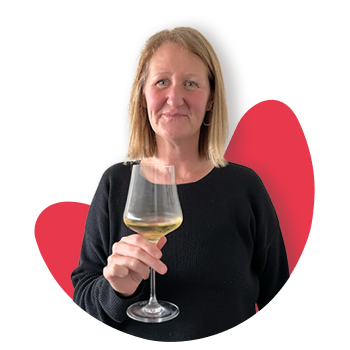
Discovering Meritxell Falgueras, communicator and sommelier
Just like the successful HBO series "Sex and the City" that broke the mold in the nineties, Meritxell Falgueras approaches the world of wine with a feminine, modern and unabashed look. As the fifth generation of one of Barcelona’s most historic wine cellars, the Celler de Gelida, sommelier, journalist and speaker of five languages, her name has been directly related to communication, social media and the publishing world for many years now. And if anyone has succeeded in extolling the culture of wine in the most cosmopolitan way possible, it is undoubtedly Meritxell Falgueras. Thus it’s an enormous pleasure to have the chance to interview her.
.jpg)
- From a very young age, you were right at home in your family's wine store. Without a doubt, wine runs in your blood. But do you remember your very first encounter with wine?
Wine has simply always been part of my family because my whole family was working in wine, even my grandma, while I was in the store doing homework. So even as a little girl I knew that a Magnum was a bottle of one and a half liters and not an ice cream!
- Not only have you taken it upon yourself to continue the Falgueras legacy. You’ve also reinvented yourself by combining writing and wine in your work. Do you think we are lacking communication in the world of wine?
My brother’s in charge of the legacy of the store, I get along fantastically with him and we work very well together, but what really turns me on is communication and yes, we’re all about information communicated with a smile.
- With five books under your belt, the last being your first fiction book: ‘Cátame’ (Taste Me), your ideas are always fresh, uninhibited and contemporary. Do you think that there’s always a good story behind every bottle?
Yes – every time we empty a bottle of wine, we fill it with feelings.
- The concept of "wine lovers" has become fashionable in recent times. What exactly is its meaning? Who can consider themselves a true "wine lover"?
The wine lover or aficionado is a big fan of wine tourism, of paired menus, of tasting different varieties or areas and understands that wine is more than a lifestyle, it is culture.
- In your podcast "#ConVinoConTodo", you talk about wine as a lifestyle. Practices, tastings, challenges and tips that bring us closer to this world in a fun and casual way. Have we finally got rid of the stereotype that wine is for connoisseurs? Or do we in fact still have a long way to go?
Wine is like art (or it is, directly, an art in itself) and has to be experienced in a personal way.
- You’re very active on Twitter, Facebook, Instagram and your blog, keeping your social media highly topical. What do you think about the new wave of "wine influencers" using social media to spread the word? Do you think it serves to introduce wine culture to younger generations or are we committing the sin of trivializing the subject?
I believe that anything that promotes moderate wine consumption is a positive thing.
- Although we are seeing an increasing female presence, the world of wine is still male-dominated. Could you give us a reference of a woman in the wine industry who inspired you to forge ahead in a man's world?
When I was little, I wanted to be María Isabel Mijares. Later, I was very inspired by the strength of Sara Pérez and the way she lived out motherhood.
- As a great activist for women's rights, you are one of the driving forces behind the collective "Mujeres del vino" (Women of wine). What does this platform consist of? What ideas do you have in mind for the coming editions?
My wonderful friend Anne Josphine Cannan, the founder of "Mujeres del vino", helped me to emerge from my postpartum depression when she asked me to help her with communication. We are a collective that helps one another and we always try to bring greater visibility to each other, making the women who work in wineries the protagonists.
- It’s clear that wines know no gender, since a good wine is equally enjoyed by men and women. However, the myth still persists that white, light or sweet wines are preferred by women. How can we break this paradigm?
No! Not at all! Lots of women love a good Priorat! By the same token, we’d also have wines for the LGTBI community! Wine has always been gender fluid!
- In your book “Qué beber cuando no bebes” (What to Drink When You Don't Drink) you suggest a wide variety of non-alcoholic beverages. What sparked your interest, especially as a sommelier, in people who, whether by personal choice or due to other circumstances, abstain from drinking? Do you think that we should give them more thought?
Yes, absolutely, especially to teach young people to drink properly and to teach everyone to enjoy life, even without alcohol. Because you can have a 0.0% drink that’s still a gastronomic experience.
- As a full-time mother, communicator, sommelier: how do you manage to get it all done? In your opinion, is true work-life balance a dream or a reality?
In my case, I’m able to reconcile these thanks to my parents and friends. Yes, it’s very frustrating not to be able to do everything at the level you’d like, but I know for sure that I don't want to give up my career or my long-awaited motherhood.
- Many sommeliers have crossed the line and ventured into making their own wine. Do you see yourself crossing over to the other side?
I’ve already worked as a winemaker in Tuscany and I don't like to be tied to a project; I prefer to promote wine culture in general. Although I plan on supporting charitable wines.
Every wine has its moment. But could you share with us any one reference that has particularly stuck with you recently?
This week I did a tasting at La Roca Village all about different types of bubbly: cava brut, Corpinnat rosé, Champagne Grand Cru... What I like most about my profession is this connection with the Greek praxis in which you never stop learning through the senses!