




 Red wine
 White wine
 Rosé wine
 Sweet wine
 Orange wine
 Champagne
 Cava
Cava Prosecco
 Lambrusco
 Crémant
 Moscato d'Asti
 Franciacorta
 Pet-Nat
 Corpinnat
 Other sparkling wines
 Wine gift boxes
 Boxed wines
 Boxed sparkling wines
 Wine bottles and glasses
 Gift card
 Non alcoholic Wine
 Non alcoholic Sparkling wine
 Aromas
 Wine conservation
 Decanters and aerators
 Bottle identifiers
 Corkscrews
 Service
 Glass identifiers
 Cleaners
 Accessories set
 Wine glasses
 Contact

From bag in box to keykeg. New ways of packaging wine
Creativity is everywhere and the wine industry is certainly no exception. We have gone from the ancient system of packaging and transporting wine in amphorae, from the romantic image of uncorking a bottle which has left its mark over the years, to the creation of new ways to transport and drink wine, which some people love and others hate.
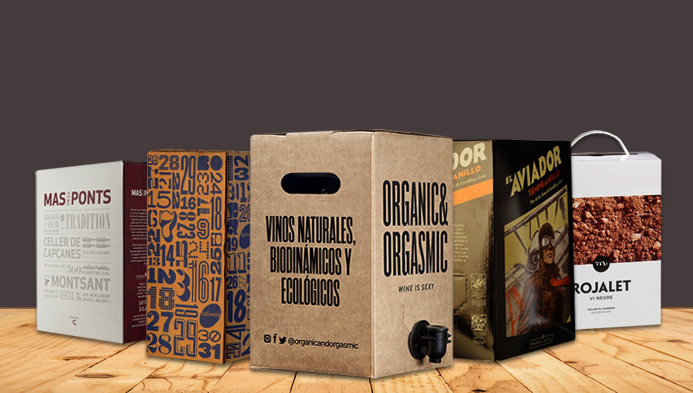
So here are a few examples of some of the new and original ways people have come up with for transporting, selling and drinking wine. Some wine packaging and distribution trends have been accepted and are now in use and others, thankfully or unfortunately, have been forgotten.
4 unusual wine packaging ideas Wine in a can
We don’t really need to say much more about wine in a can. The can is the same as is used for beers and carbonated or energy drinks and is aimed mainly at young audiences, the millennial generation. This style seems to have caused a clash between generations and, like everything, it has its fans and its haters. Wine in a can is obviously trying to make wine culture more accessible and casual for a younger audience. In the United States, wine in a can has exploded in popularity, which means that, despite the negative comments, this trend is probably here to stay.
Bag in Box
As the name suggests, this format involves a bag within a box. This curious container was designed to revolutionise the way we preserve and serve wine without waste. The container has a multilayer polyethylene or aluminum bag with a valve that acts as a tap integrated into the bag itself. This bag is placed inside a special box with space for the tap to sit outside, making serving wine as convenient and clean as possible. The liquid sits in a material that does not affect its organoleptic properties and does not allow any oxygen in, so it is much better preserved. The bag in box is a practical system and great value for money, which makes it accessible for every budget.
Keykeg
“Wine is a delicate drink and deserves the best possible protection.” This premise is the focus of those behind the keykeg, an innovative PET (polyethylene) barrel with a laminated aluminum bag inside, similar to the one used in the bag in box system. This helps better preserve the quality of the wine, still or sparkling. It uses a gas propellant that never comes into contact with the wine, so the liquid maintains all its organoleptic properties and quality for much longer. This is an easy-to-fill and easy-to-use system that comes in different sizes depending on what the customer needs and is ideal for businesses who serve wine by the glass or in bulk.
The keykeg is also used in the brewing industry, and is actually much more common there than in the wine industry. It is currently widely used in the United States, growing in popularity in countries like France and Italy, and has recently been introduced in Spain.
Wine in a tube
Some years ago, two ideas emerged for new ways to sell wine: wine in test tubes and wine in cardboard tubes created by two different companies that promoted the use of these unusual containers and that never really got off the ground.
Wine in test tubes was invented some years ago by Vincent Barthe, a French computer scientist who loved oenology, and the company that sold it offered selections of wines in two different size tubes: 6 and 10 millilitres.
In terms of wine in cardboard tubes, the idea was quite similar to the bag in box, but instead of a box it was a cardboard tube that contained the bag with the wine. They were marketed by a company called Four, named after the size of their containers: 4 bottles of wine, which is equivalent to 3 litres of liquid. In short, and as they say: “beauty is about what’s inside.” What about you? Have you tried wines in any of these unusual styles? Or do you prefer the old-school bottle and cork?
The post From bag in box to keykeg. New ways of packaging wine appeared first on Decantalo Wine Blog.


