




 Red wine
 White wine
 Rosé wine
 Sweet wine
 Orange wine
 Champagne
 Cava
Cava Prosecco
 Lambrusco
 Crémant
 Moscato d'Asti
 Franciacorta
 Pet-Nat
 Corpinnat
 Other sparkling wines
 Wine gift boxes
 Boxed wines
 Boxed sparkling wines
 Wine bottles and glasses
 Gift card
 Non alcoholic Wine
 Non alcoholic Sparkling wine
 Aromas
 Wine conservation
 Decanters and aerators
 Bottle identifiers
 Corkscrews
 Service
 Glass identifiers
 Cleaners
 Accessories set
 Wine glasses
 Contact

Tempranillo, the great Spanish ambassador
Tempranillo is the fourth most planted grape in the world and the most common red variety in Spain. It is known as the grape of a thousand wines because it grows in many different regions and the resulting wines are different everywhere.
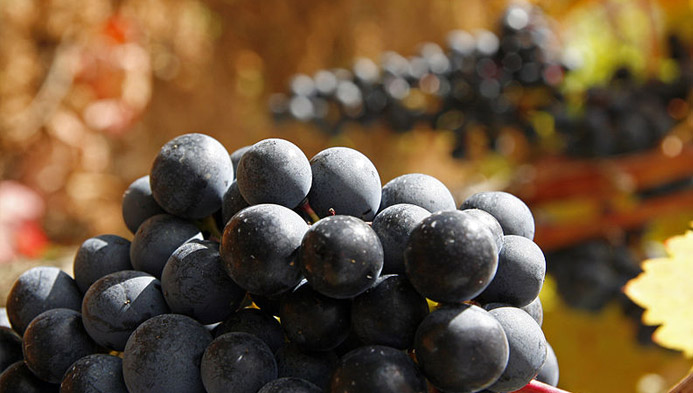
Thought of as one of the 9 noble red grapes, Tempranillo is the most prevalent grape in many parts of Spain. This is especially true in the D.O.Ca. Rioja, the first region in the country to gain national and international recognition with this variety. 38 denominations of origin now use it, and it is the main grape in 14 of those. Although it can be used for single-variety wines, it is more commonly used as the predominant grape in coupages. In Ribera de Duero, for example, the Regulatory Council states that 75% of a wine must be Tempranillo to be labelled under this designation of origin.
7 facts about the Tempranillo variety
1- Where does the Tempranillo grape grow?
If there is one thing this variety likes, it is temperature contrasts. It needs both low temperatures for optimum acidity and warmth to guarantee intensity in the fruit and high levels of sugar. That means the best Tempranillo wines come from grapes grown in areas with high levels of sun during the day and very low temperatures during the night. And these characteristics are both typical of the continental Mediterranean climate.
Because of this, in Spain, you will find a high number of these vines in the Ribera del Duero, Rioja, Catalayud, Cigales, La Mancha, Somontano, Valdepeñas, Costers del Segre and Conca de Barberà Denominations. Outside Spain, this variety is mostly grown in Portugal, France, Argentina and the United States.
2- What does the Tempranillo grape look like?
One of the main characteristics of the Tempranillo grape is that it has a short cycle, budding in the middle of the season and ripening early. Hence the name Tempranillo. The clusters, once ripe, are large, compact and uniform. The berries are bluish black, with thick skin and colourless, juicy and very meaty pulp. And those characteristics are perfect for making medium-bodied red wines that will go with everything.
3- What are Tempranillo wines like?
Because this popular variety is so versatile, it can be used to make both young wines as well as reservas and gran reservas. These are fruity reds with herbaceous and floral touches in the young wines and spicy, woody notes in the aged wines. In general, these might be Tempranillo’s main traits, but the truth is that each wine is unique. Significant factors like where the grape grows and the winemaking process mean the possibilities are endless.
4- The grape of a thousand wines
Tempranillo is a native grape that grows in many places around the world, but in each place it is slightly different, even in name. There are currently more than 15 different names, each of them producing wines with different nuances. To give you a few examples, in Rioja it’s known as Tempranillo, in Ribera de Duero it’s Tinto Fino or Tinto del País, in Zamora it’s Tinta de Toro, in Catalonia it’s Ull de Llebre, in Galicia it’s Arauxa, in La Mancha it’s Cencibel, in Portugal it’s Tinta Roriz, in France it’s Grenache de Logroño and in the USA it’s Valdepeñas.
5- Tempranillo around the world
Although almost all international varieties traditionally came from France, this native Spanish variety is crossing borders around the world. Being a versatile variety that adapts well to different cultivation methods and creates a wide variety of wine styles, Tempranillo is increasingly common in places as diverse as California, Chile, Argentina and particularly the New World.
6- The white version of Tempranillo
The Tempranillo variety is already well-known around the world, but one of its variants is not quite as famous. We’re talking about Tempranillo Blanca. Just like with Garnacha Blanca that came from Garnacha Tinta and Pinot Grigio that came from Pinot Noir, Tempranillo Blanca is the result of a natural mutation that occurred in a strain of red Tempranillo in 1988 in an old vineyard in the Rioja town of Murillo del Río Leza. It is a genetic variation through albinism that is very rare but completely natural. As a result, it is now the second most planted white variety in the Rioja Qualified Denomination of Origin.
7- Perfect pairings for Tempranillo
Wines mostly made with the Tempranillo variety are the most versatile. They are structured in colour, sugar and acidity and are great for pairing. Of course, each wine has some particularly good pairings. Young wines with a great fruity character and persistence go extremely well with traditional dishes like roasts, poultry, red meats and serrano ham. But if the wines are aged, this variety sits much better alongside heavier dishes. Seasoned stews or a game stew would be a good choice. But whatever your tastes, whether you like meat, fish, cheese or desserts, when it comes to pairing, you just need to remember not to lose the flavours of either the food or the wine. The secret is to find the right combination so that you still get the most out of both. One pairing rule that almost always works is to combine dishes with wines from the same region.
Now you know a bit more about one of the most famous grape varieties in the world, you will need to go and try every style of Tempranillo. We can guarantee you will never run out of things to try…


