



 Red wine
 White wine
 Rosé wine
 Sweet wine
 Orange wine
 Champagne
 Cava
Cava Prosecco
 Lambrusco
 Crémant
 Moscato d'Asti
 Franciacorta
 Pet-Nat
 Corpinnat
 Other sparkling wines
 Wine gift boxes
 Boxed wines
 Boxed sparkling wines
 Wine bottles and glasses
 Gift card
 Non alcoholic Wine
 Non alcoholic Sparkling wine
 Aromas
 Wine conservation
 Decanters and aerators
 Bottle identifiers
 Corkscrews
 Service
 Glass identifiers
 Cleaners
 Accessories set
 Wine glasses
 Contact

The extraordinary power of tannins
In the world of wine, you will almost definitely have heard an expert (and many others) use the word “tannins” when tasting a wine. Although at first glance it may seem like a bit of a pedantic term, the truth is that without tannins, wine would have neither structure, nor body, nor aging potential. In other words, it is up to tannins to take a wine from mediocre to extraordinary, so their role in the winemaking process is of vital importance.
What are tannins?
If you have ever drunk a tea that you have left to infuse for a long time, you will likely remember the bitter and astringent sensation it brings when you taste it. This effect is provided by tannins. These are natural chemical compounds found in various fruits and vegetables. In grapes, they are called polyphenols and can be found in the skin, seeds and stems of bunches. These compounds are released when the grapes are crushed or pressed and they dissolve in the must. Depending on the grape variety and the winemaker’s vinification process, the amount of tannins that appear in the wine will be different.
How do they influence a wine?
Tannins play a key role in the composition and flavour of a wine, and have several influences on it. On the one hand, they are responsible for astringency in wine. This sensation of dryness or roughness in the mouth is due to the interaction of tannins with the proteins in the saliva. Astringency can vary from mild and balanced to very pronounced, depending on the wine and its age. Over time, tannins tend to soften and become less astringent as the wine ages. This is especially important in red wines, as proper bottle aging can improve the texture and harmony of the wine. On the other hand, tannins provide structure and body to the wine. The higher the tannin concentration, the denser and more robust the wine will be. However, the winemaker’s secret to success lies in finding the right balance, as too much tannin can give a harsh, unbalanced flavour.
Another aspect in which tannins are essential is in the aging of the wine. Only wines with a considerable amount of tannins have aging potential and over time these can become great, complex and deep wines. On the one hand, they are natural antioxidants that help protect wine against oxidation by interacting with oxygen and preventing the degradation of aromatic compounds and wine flavours. On the other hand, tannins tend to integrate harmoniously with the flavours and aromas, providing a more complex and refined tasting experience.
How do you spot tannins?
Identifying a wine with a high tannin load is easy. The aromas and flavours they give off are very characteristic. To begin with, if you bring your nose to the glass, you will be able to distinguish aromas of leather, tobacco, dried leaves, cocoa or black tea. These are foods that have a lot of tannins and can be recognised in wine. Then, in the mouth, the bitter taste, rough structure and persistence it provides make it easily recognisable.
Which wines have the most tannins?
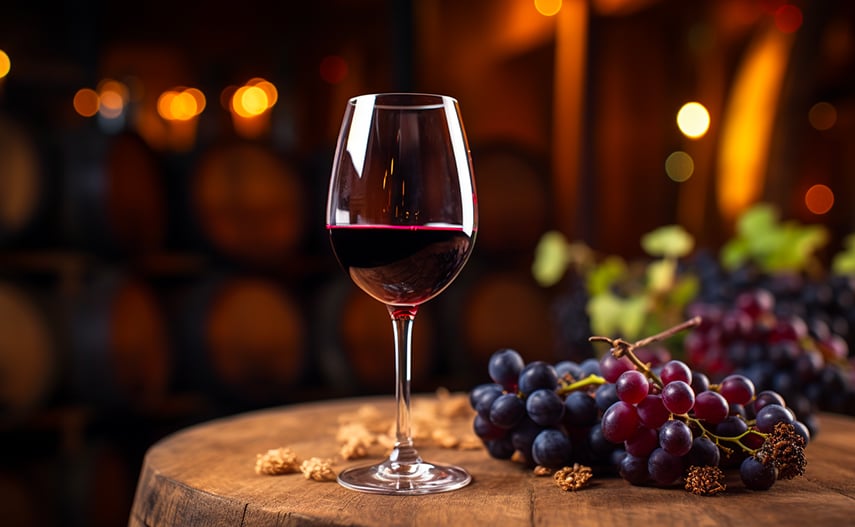
Red wines have a higher tannin concentration. This is due to the production process. When vinifying a red wine, the must macerates with the skins and stems, and this gives it a large number of tannins that will later be reflected in the wine. However, depending on the variety used, the level of tannins in red wine will vary. For example, Cabernet Sauvignon, Syrah and Nebbiolo are much richer than Gamay, Pinot Noir and Zinfadel and the wines made with the former will be fuller and denser than the latter. As well as that, young red wines are less tannic, while those that have undergone a long aging process develop a higher amount.
White wines have less tannin, especially if they don’t spend any time in barrels. As they do not undergo a maceration process, they do not have the tannins from the skins. There is also orange wine, which are made from white grapes, but following a vinification process like red wines. In these, you will find the outstanding characteristics of astringency and bitterness of the tannins that, without a doubt, are part of its special personality.
But, whether there has been any maceration or not, we can never say that a wine lacks tannins, because they are a natural compound intrinsic to the grape. So, in greater or lesser concentration, all wine contains tannins. From here, it is up to you to decide whether you prefer tannic wines or more subtle wines.