




 Red wine
 White wine
 Rosé wine
 Sweet wine
 Orange wine
 Champagne
 Cava
Cava Prosecco
 Lambrusco
 Crémant
 Moscato d'Asti
 Franciacorta
 Pet-Nat
 Corpinnat
 Other sparkling wines
 Wine gift boxes
 Boxed wines
 Boxed sparkling wines
 Wine bottles and glasses
 Gift card
 Non alcoholic Wine
 Non alcoholic Sparkling wine
 Aromas
 Wine conservation
 Decanters and aerators
 Bottle identifiers
 Corkscrews
 Service
 Glass identifiers
 Cleaners
 Accessories set
 Wine glasses
 Contact

Verdejo, the most ‘mainstream’ white grape
The Verdejo grape could be described as a phenomenon, and it has caused a huge increase in white wine consumption in Spain. But what is so special about this variety that is making waves around the world?
At Decántalo, we have a wide selection of Verdejo wines in different styles and from great producers. If you are one of the few who have not tried them yet, you will not be able to resist!
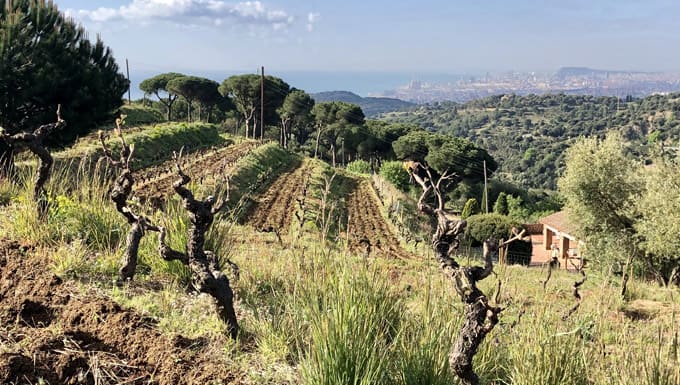
A short history of the Verdejo grape
The Verdejo grape is said to come from a cross between the Castellana Blanca and Savagnin (Traminer) varieties and it may have been brought to Spain from North Africa in the 11th century during the recapture of Toledo. Toro and Rueda are the perfect places for it to grow, especially the latter, where it has become the flagship grape.
By Toro and Rueda, we are talking about the denominations of origin located in the Spanish region of Castilla y León, where the variety grows mainly in the provinces of Valladolid, Segovia and Ávila. Its name refers to the characteristic greenish hue of the wines that are made from it.
What is the Verdejo grape like?
This variety ripens early and is resistant to drought but prone to suffering from vine diseases like mildew.
The clusters are compact, small to medium in size, and the berries are spherical, with medium-thick skins and large seeds.
As we have already mentioned, it is one Spain’s characteristic white grapes, but it has been growing in Australia since 2010.
What are the hugely popular Verdejos like?
It may be that the success of Verdejo wines lies in the variety’s versatility. The wines are simple, honest and very pleasant which makes them appealing to all tastes.
Perfect for drinking by the glass or with aperitifs, their pleasant acidity and hint of bitterness helps to cleanse the palate, making them perfect accompaniments to spicy dishes. They are ideal to enjoy with your favorite Asian dishes and Mexican food. They also go very well with foods with oily textures. It couldn’t be simpler! You can’t go wrong!
Despite the fact that Verdejo is very pleasant with no harsh edge that some people don’t like, there are some complex and more elaborate Verdejo wines as well as the young wines. This grape suits barrel fermentation and aging very well, which gives its wines an elegant creaminess and notes of almond, walnut and honey.
In their youth, Verdejo wines have an aromatic explosion similar to that of wines made with the Sauvignon Blanc variety.
They combine a heavenly fruit expression of melon, pineapple, passion fruit and mango, complemented by the vegetal notes of fennel, anise and hay as well as citrus fruits like grapefruit and lime, which adds freshness.
And if I ask for a Rueda, will they give me a Verdejo?
The grape is so characteristic of this Spanish wine region that it can seem like one is synonymous with the other but that is not the case, and often causes confusion.
In the Rueda Denomination of Origin there are also wines made with the Sauvignon Blanc variety, so if you order a Rueda, they might bring you a Verdejo or they might serve you a wine made with Sauvignon Blanc. You might even find yourself with a coupage of both. Rosé and red wines are also made in this denomination of origin, so Rueda is not synonymous with Verdejo, nor are all Verdejo wines from Rueda because, as we have already mentioned, they can also be found under the Toro Denomination of Origin, as a VT (Vino de la Tierra) of Castilla y León, or even without a denomination of origin at all.
As well as the single-variety wines made from Verdejo and Sauvignon Blanc, the Rueda Denomination of Origin also has a special classification for its white wines which is as follows:
Rueda: includes white wines made with a minimum of 50% of the Verdejo and Sauvignon Blanc white varieties. These are some of the most typical wines of the D.O. Rueda: young, bright, fresh and fruity.
Rueda Dorado: refers to a dry liqueur wine made from the Verdejo or Palomino varieties. A little-known but very interesting wine that undergoes oxidative aging for at least the last two years prior to being released. As the name suggests, this wine is golden in colour, powerful and complex, with aromatic nuances of dried fruit.
Rueda Pálido: this is also a liqueur wine made with the Verdejo or Palomino varieties, but produced using biological aging for at least three years immediately prior to being released.
The wine ranges from straw yellow to pale gold in colour, the aromas and flavours are reminiscent of yeasts, nuts and roasted apples.
Rueda Espumoso: must contain a minimum of 75% of the Verdejo and Sauvignon Blanc varieties. Most of them are made using the traditional method with an aging period of no less than 9 months. Other processing systems are also allowed.
These sparkling wines are fresh, fruity and persistent on the palate and some may contain the words “Gran Añada” (Great Vintage) alongside the year of harvest, only if the production process, from tirage to disgorging, exceeds 36 months.
Gran Vino Rueda: this is a more recent category that refers to wines made from grapes that come from vines over 30 years old and with a yield under 6,500 kg per hectare.
Vinos de Pueblo: these wines indicate which area the grapes come from, as long as the percentage of these grapes is equal to or greater than 85%.
As you can see, Verdejo variety wines are sought-after and loved by so many. Why not browse our catalogue and choose the ones you like the most? You can be sure that these wines will go down well!


