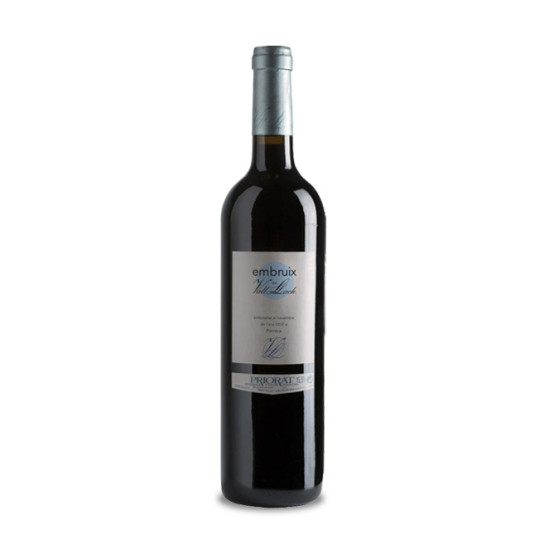


Lluís Llach is not merely an icon of Catalan music and the Nova Cançó—a movement that championed cultural identity during the Francoist dictatorship—but also a fervent enthusiast of wine culture. His connection to the land and tradition led him to acquire the estate Vall-Llach, a venture that went far beyond mere business. Neither he nor his partner, Enric Costa, were wine trade aficionados, nor did they even drink. Their aim was far more ambitious: to spark a social revolution in Porrera, using wine as a vehicle to generate local wealth and revitalise the village.
And indeed, they succeeded. Once the project at Vall-Llach commenced, nestled in the heart of DOQ Priorat, they managed to multiply the grape price by thirteen times compared to the previous year with just one harvest. But that was not all: they restored two historic buildings in the municipality and employed fifteen people from Porrera, blending tradition, culture, and social development in a unique project that remains a benchmark today.
Since 2013, Albert Costa, son of Enric Costa, has been at the helm of the winery, overseeing the production of wines and ensuring the project's quality and identity are preserved. Under his leadership, Celler Vall-Llach has successfully combined absolute respect for the terroir with enological-artisanal excellence. Each wine seeks to convey the minerality of the licorella soils and the character of the old vines, respecting traditional methods while incorporating modern techniques of precision viticulture.
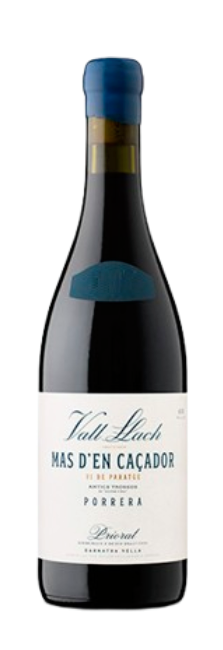
A prime example of this philosophy is Mas d'en Caçador Vi de Paratge, a wine crafted from old garnacha vines, north-facing to receive fewer hours of sunlight, planted on high-altitude slopes in the 2-hectare site of Mas d’en Caçador. This combination of orientation and elevation allows for slower ripening, balanced acidity, and complex nuances that are reflected in every sip. Organic and biodynamic viticulture is practised, and the vines, thriving in licorella soils, are between 80 and 100 years old.
The harvest is entirely manual, and the grapes are meticulously selected, both in the vineyards and on the sorting table at the winery entrance, to ensure only the finest reach fermentation. The garnacha ferments spontaneously with natural yeasts, and maturation occurs in wood, resulting in a wine that marries tradition, precision, and the utmost expression of the Priorat terroir.
Mas d'en Caçador Vi de Paratge is a delightful high-altitude old garnacha that speaks of the land, the history, and those who believe wine can change more than just palates.