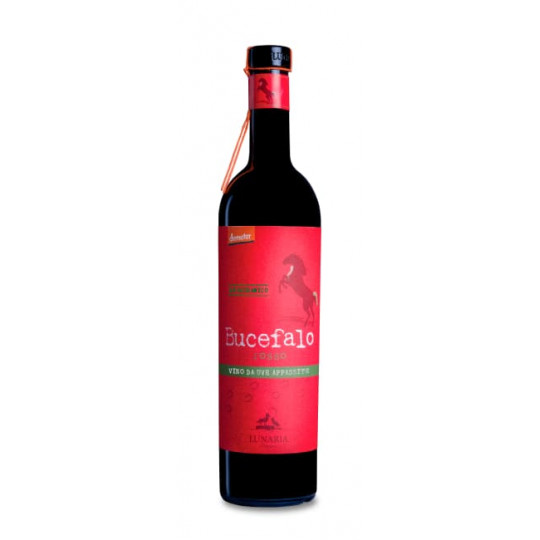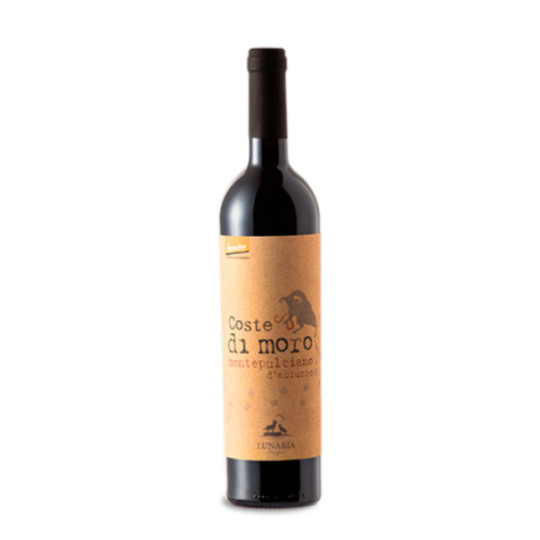


At Cantina Orsogna, a winery located in the Italian municipality of the same name (in the province of Abruzzo), various ecological projects are undertaken. One such initiative is the revival of the region's red grape varieties, such as primitivo. Thanks to this project, developed in collaboration with the Gessopalena Town Council, wines like Cantina Orsogna Lunaria Ruminat Primitivo are produced. From its inception, Cantina Orsogna has been certified as both biodynamic and organic. Their approach, always rooted in sustainability, seeks the perfect balance. Cantina Orsogna Lunaria Ruminat Primitivo is a biological, vegan, and biodynamic wine, spontaneously fermented and naturally stabilised.
The story of Cantina Orsogna began in 2005 when a group of viticulturists, dedicated to organic farming, decided to unite to take a further step towards biodynamics. "Future generations will only be able to tread our vineyards if the decisions we make today are responsible!"
Today, Cantina Orsogna has established itself as the largest certified biodynamic community in the world. The vineyards of this project are situated on the slopes of the Majella National Park, 15 km from the Adriatic Sea (on the Trabocchi coast). This massif shields the region from harsh winter climates, creating a microclimate between the maritime breezes and the Apennines. These cool temperatures persist through the summer, where the diurnal temperature variation broadens (aiding grape maturation). In this mountainous terrain, the medieval vineyards, located at an altitude of 450 metres, are cultivated on calcareous-clay soils where the formation of organic matter is always sought. To achieve this, they adhere to biodynamic principles, eliminating chemicals, following lunar cycles, and respecting biodiversity.
In the winery, Cantina Orsogna Lunaria Ruminat Primitivo is sorted, destemmed, and crushed. Once the harvest paste is obtained, the skins remain in contact with the must for about 20 days at a constant temperature. Here, inevitably, spontaneous alcoholic fermentation begins with the indigenous yeasts found on the berries. All this occurs in stainless steel tanks, followed by ageing in cement, which is prolonged in the bottle.
Needless to say, throughout this process, no sulphur dioxide is added at any point, thereby achieving the purest expression of these Italian vineyards.