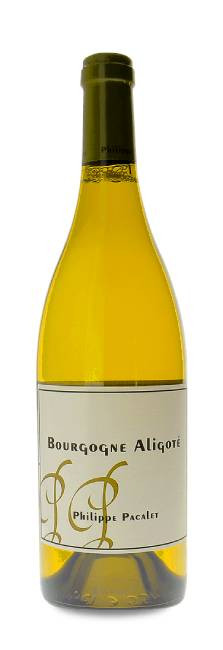


Philippe Pacalet Bourgogne Aligoté is a white wine made by Philippe Pacalet in the A.O.C.Bourgogne Aligoté, in Burgundy, northwest France.
This denomination takes its name from the Aligoté, the second most widely planted white grape variety in this region lying two hours from Paris and one hour from Lyon. In particular, this variety has been cultivated in this area since the 12th century, offering great results thanks to the temperate climate. This weather is the result of the confluence of three climates: southern, oceanic and continental. This means many hours of sunshine (1,300 hours between April and September), average temperatures of 20ºC, annual rainfall of 700 mm (between May and June) and a north wind (which limits humidity). Planting on slopes between 200 and 500 metres above sea level, where water drains easily, are the keys to this area.
The quality here oozes from every corner and is supervised at all times by Philippe Pacalet. This vigneron, one of the best known and most important in the natural wine movement, oversees a total of 10 hectares that he has leased to different vignerons in the area. These plots, which he works himself, are where he gets the Aligoté grapes to make Philippe Pacalet Bourgogne Aligoté, always under the premise of low intervention, where the vine nourishes itself. For this reason, the grapes are harvested by hand, with the utmost care by Pacalet himself, who in 2007 bought a winery in the heart of Beaune. Since then, he has been making and aging his wines under the principles he inherited from his uncle Marcel: intuition and little intervention.
The Philippe Pacalet Bourgogne Aligoté production process begins with the whole bunches undergoing carbonic maceration. This will ensure that inside the tank, where the atmosphere has very little oxygen, the grapes at the bottom of the tank will turn to must thanks to the weight of the clusters at the top, while at the same time a small intracellular fermentation takes place inside the grapes, resulting in a much more aromatic wine. This process takes place spontaneously thanks to native yeasts. After fermentation, the grapes are transferred to oak barrels where they are aged for 15 to 18 months. After this time, Philippe Pacalet Bourgogne Aligoté is transferred by gravity to another tank where it will settle for two months before bottling (by hand and without filtration).