




 Red wine
 White wine
 Rosé wine
 Sweet wine
 Orange wine
 Champagne
 Cava
Cava Prosecco
 Lambrusco
 Crémant
 Moscato d'Asti
 Franciacorta
 Pet-Nat
 Corpinnat
 Other sparkling wines
 Wine gift boxes
 Boxed wines
 Boxed sparkling wines
 Wine bottles and glasses
 Gift card
 Non alcoholic Wine
 Non alcoholic Sparkling wine
 Aromas
 Wine conservation
 Decanters and aerators
 Bottle identifiers
 Corkscrews
 Service
 Glass identifiers
 Cleaners
 Accessories set
 Wine glasses
 Contact

Orange wines: the trend that is revolutionising white wine
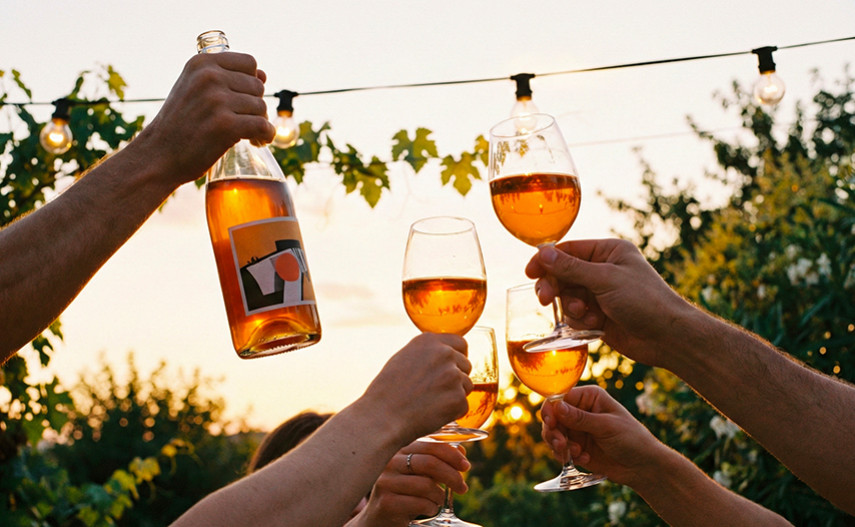
They are not orange wines. Nothing could be further from the truth. However, it is the first thing that usually comes to mind when we read the term orange wine, and understandably so, as its name lends itself to much confusion. So, what exactly are orange wines, and why are they experiencing a surge in popularity?
What are orange wines?
Before delving into the explanation, let's start at the very beginning: do you know how wine is made?
In the case of white wines, after the harvest, the grapes arrive at the winery and are destemmed, meaning the berries are separated from the stalk. They are then pressed, and the resulting must ferments to produce a young white wine.
For red wines, the initial process is similar: the grapes are destemmed and, once clean, pass through a crushing machine that serves the purpose of the traditional foot treading. The aim is to gently break the grape skins to extract a significant amount of must without being aggressive. From there, alcoholic fermentation begins.
The major difference is that, in the case of red wines, the must always ferments in contact with the grape skins. It is precisely this contact that imparts the characteristic colour to reds, as well as tannins and structure. The intensity of the colour will depend on both the grape variety and the maceration time.
And this is where the "mystery" of orange wines begins.
We could say that orange wines are white wines made as if they were reds. Their main characteristic is that the must ferments and macerates in contact with the grape skins.
As the skins impart colour, the longer the contact time, the more the wine moves away from the pale tones typical of young whites and evolves towards more intense colours, ranging from golden to amber and orange. Hence their name: orange wines.
Innovation or a return to origins?
Although they are currently in vogue—largely thanks to the natural wine movement—their production is an ancient practice with over 6,000 years of history.
In the Caucasus region, particularly in Georgia, wines were made in large clay vessels called kvevri or qvevri, which were buried underground to maintain constant temperature and humidity. This traditional method, forgotten for centuries, is being revived by many contemporary winemakers.
That said, an orange wine does not necessarily need to be made in amphorae. It can be produced in any type of vessel, as long as the must remains in contact with the skins for the duration determined by the winemaker, whether a few days or even several months.
This is where the connection with natural wines appears. In ancient times, maceration with skins helped preserve the wine thanks to the natural sulfites present in the grape skins, in an era when chemical additives did not exist.
Today, many natural wine producers seek precisely that: minimal intervention, respect for the environment, and the absence of added sulfites. Orange wines offer a way to produce authentic wines, unadulterated, with their own personality and a greater capacity for natural preservation.
What does an orange wine taste like?
They are often described as “whites with the soul of a red.”
The prolonged contact with the skins imparts not only colour but also texture, tannins, and aromatic complexity. Therefore, orange wines typically have a noticeable tannin presence, although more subtle than that of a red, and a more rustic character than a conventional white.
On the palate, they are often full-bodied, intense, and expressive wines with complex aromas where mineral, saline notes, hints of nuts, dried fruits, and spices may appear.
Their profile will vary depending on the grape variety used and the maceration time. They are not wines for every palate, but they have enormous gastronomic potential that is increasingly being utilised in restaurants and bars worldwide.
How to identify an orange wine?
The colour speaks volumes. Intense golden, amber, or orange hues are often the first clue that you are dealing with an orange wine.
Although the category orange wine does not always appear explicitly on the label, another clear indicator is finding mentions such as “skin maceration” or “maceration in contact with the skins” in the wine's description.
To make it even easier for you, on the Decántalo website, we have grouped them into a specific category, so you can discover them without complications. And if you want to get straight to the point, here are three suggestions you won't be able to resist:
Heinrich Naked Orange NV |
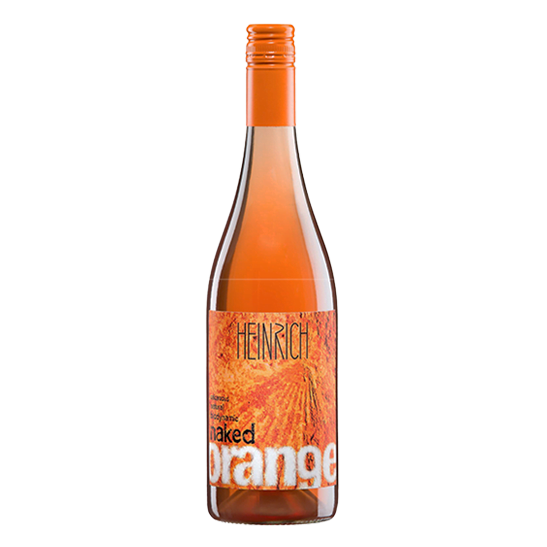 |
From Burgenland, Austria, Gernot and Heike Heinrich demonstrate that whites can also be bold. This orange wine combines several biodynamic white varieties and macerates in contact with their skins for two weeks, gaining texture, body, and character. It is an expressive wine that breaks the mould, showing how a white can be deep, vibrant, and full of personality. |
Casa Balaguer Salicornio Malvasía |
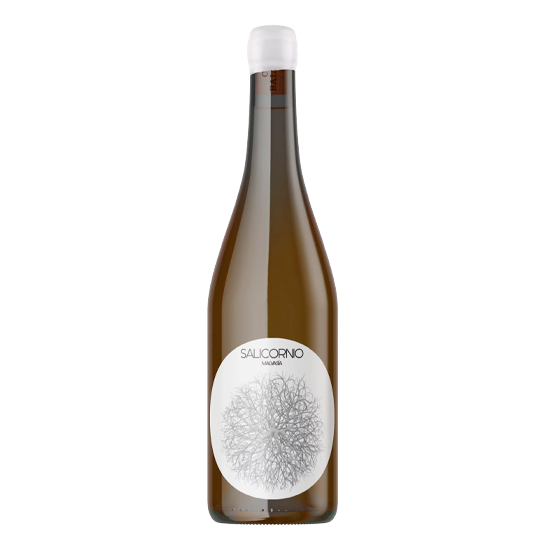 |
On the coast of Alicante, the Casa Balaguer project revives native varieties with absolute respect for the environment. Their orange wine made with Malvasía grows by the sea, influenced by the Mata Natural Park, and benefits from the sea breeze and gravel and humus soils. With minimal intervention and spontaneous fermentation, its saline and fresh character conveys the Mediterranean essence in every sip. |
Pierre Frick Gewürztraminer Macération |
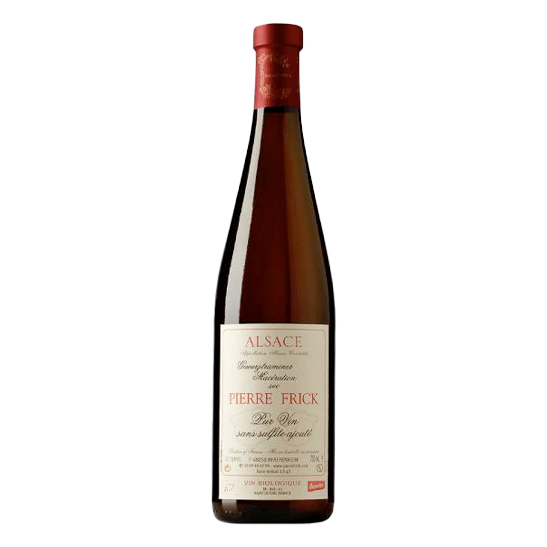 |
In Alsace, Pierre Frick takes biodynamics and minimal intervention to the extreme. This orange wine is made with Gewürztraminer grown on calcareous soils rich in marl and sandstone, fermenting and macerating with its skins for 7 days and ageing in century-old barrels. Unfiltered and without added sulfites, it is an intense, authentic wine full of tradition, reflecting the purity of the Alsatian terroir. |
Are you tempted to try them?


